


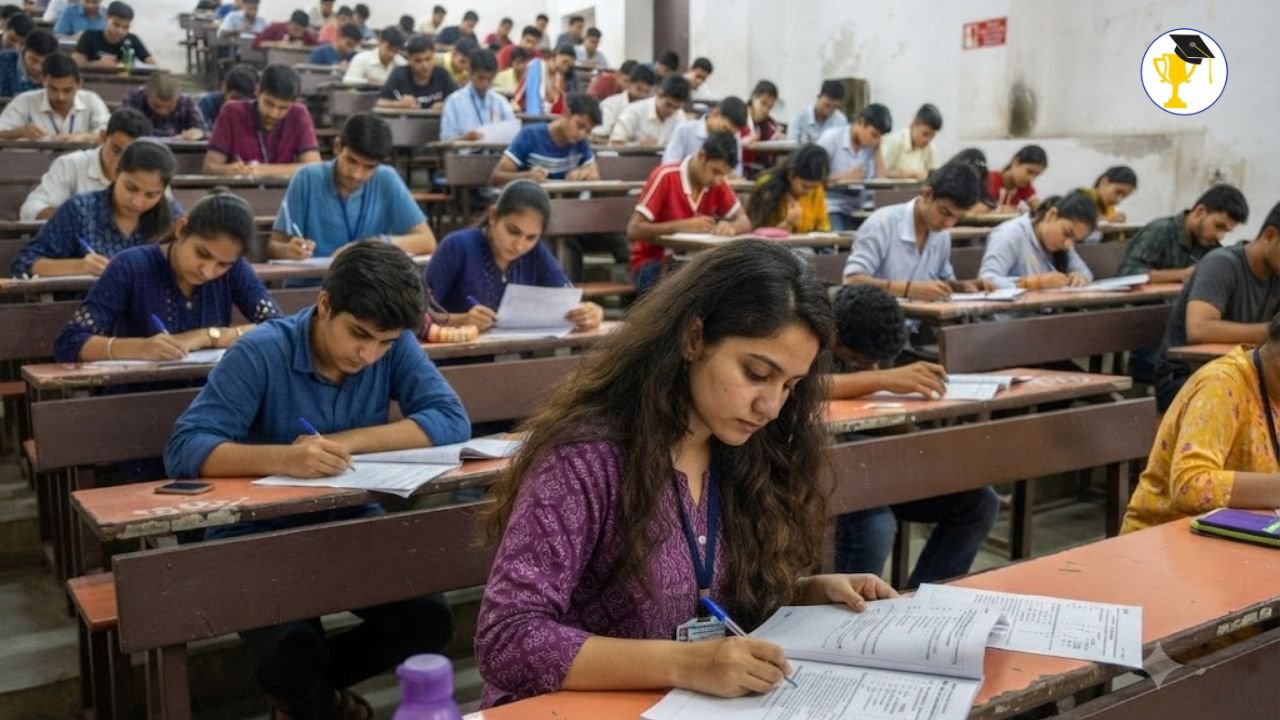
The National Eligibility cum Entrance Test, commonly known as NEET, is one of the most important medical entrance examinations in India. Every year, millions of students appear for NEET with the dream of pursuing careers in medicine, dentistry, and other healthcare-related fields.
For students aspiring to become doctors, NEET is an important milestone. However, preparing for a highly competitive examination requires more than simply studying for long hours. Students need a structured preparation plan, strong conceptual understanding, regular revision, effective time management, and the right approach to solving questions.
This guide explains the NEET entrance examination, important subjects, preparation strategies, common mistakes, and practical tips to help students prepare more effectively.
What Is NEET?
NEET is the national-level entrance examination used for admission to undergraduate medical education in India. It is conducted by the National Testing Agency (NTA).
NEET scores and ranks are used in the admission process for courses such as MBBS and BDS, along with other programs and institutions according to the applicable rules for that admission year.
Because medical seats are limited compared with the number of applicants, competition can be extremely high. Students therefore need to prepare systematically and focus on accuracy as well as speed.
NEET Eligibility
Students appearing for NEET generally need to have completed or be appearing for their Class 12 or equivalent examination with the required subjects.
The key subjects for NEET preparation are:
- Physics
- Chemistry
- Biology, including Botany and Zoology
There are also specific eligibility requirements related to age, qualifying examinations, subjects, and other admission conditions. These requirements may change, so students should always check the latest official NEET information before applying.
Understanding the NEET Syllabus
The NEET syllabus is primarily based on the concepts covered in Classes 11 and 12. Students should therefore build a strong foundation during their school years instead of treating NEET preparation as something completely separate from their academic studies.
Physics
Physics requires conceptual understanding as well as numerical practice. Topics such as mechanics, thermodynamics, electricity, magnetism, optics, modern physics, and related areas should be studied carefully.
Students should understand the meaning and application of formulas instead of simply memorizing them.
Chemistry
Chemistry consists of Physical Chemistry, Organic Chemistry, and Inorganic Chemistry.
Physical Chemistry requires regular numerical practice. Organic Chemistry becomes easier when students understand fundamental concepts and reaction mechanisms. Inorganic Chemistry requires systematic learning and frequent revision.
Biology
Biology is one of the most important areas of NEET preparation because it carries substantial weight in the examination.
Students should study Biology thoroughly and pay close attention to their prescribed textbook content, diagrams, terminology, examples, and important facts. Regular revision is essential because Biology involves remembering a large amount of information.
Why NCERT Is Important for NEET
A strong preparation strategy should begin with the prescribed school-level textbooks, particularly NCERT.
Students should first understand each chapter thoroughly before moving toward additional question banks and advanced preparation material.
Rather than reading a chapter only once, students should revise it repeatedly. During revision, highlighting important points, creating short notes, and practicing questions can improve retention.
The goal should not be to collect as many study materials as possible. Completing and revising a limited set of reliable resources is generally more useful than constantly switching between books and courses.
Create a Practical Study Schedule
A successful NEET preparation plan should be realistic.
Students can divide their day into dedicated sessions for Physics, Chemistry, and Biology. The exact number of study hours will differ from student to student, but consistency is more important than simply counting hours.
A useful daily routine can include:
Concept Learning: Understand new topics and clarify doubts.
Question Practice: Solve questions related to the topics studied.
Revision: Review previously completed chapters.
Error Analysis: Identify mistakes and understand why they happened.
Students should also keep some time for rest and physical activity. Adequate sleep is important for concentration, memory, and overall performance.
Practice Questions Regularly
Reading theory alone is not enough for a competitive examination.
After completing a topic, students should solve relevant questions. This helps them determine whether they can actually apply the concepts they have learned.
Question practice also improves:
- Speed
- Accuracy
- Conceptual understanding
- Time management
- Confidence
Students should gradually increase the difficulty level of questions rather than immediately attempting only the most difficult problems.
Mock Tests and Performance Analysis
Mock tests are an essential part of NEET preparation.
Students should take regular full-length tests as their preparation progresses. These tests help develop familiarity with the examination environment and reveal areas that need improvement.
However, the most important part of a mock test is what happens afterward.
Students should analyze:
- Incorrect answers
- Questions left unanswered
- Questions that consumed too much time
- Calculation mistakes
- Conceptual mistakes
- Questions answered through guessing
Maintaining an error notebook can be particularly useful. Students can record recurring mistakes and revise them regularly.
Time Management During the Exam
Managing time effectively can make a major difference in a competitive examination.
Students should avoid spending too much time on a single question. If a question seems difficult or time-consuming, moving ahead and returning to it later can be a better strategy, depending on the examination instructions and personal approach.
Regular timed practice can help students develop a comfortable pace before the actual examination.
Common NEET Preparation Mistakes
One of the most common mistakes is studying without a clear plan. Students may spend considerable time studying but still make little progress because their preparation lacks structure.
Another mistake is ignoring weak subjects. Students sometimes focus heavily on their strongest subject because it feels easier. However, improving weaker areas can have a significant impact on overall performance.
Skipping revision is another major problem. Students may complete dozens of chapters but forget important concepts because they do not revisit them regularly.
Students should also avoid comparing their preparation constantly with friends or other candidates. Competitive preparation is a personal journey. The focus should be on improving one’s own understanding and performance.
How to Stay Consistent
NEET preparation can take months or even years, and maintaining motivation throughout the journey can be challenging.
Students may experience low mock-test scores, difficult chapters, or periods when their progress feels slow. These situations should be treated as opportunities to identify weaknesses rather than reasons to give up.
Instead of focusing only on the final rank, students should set smaller goals:
- Complete a specific chapter
- Improve test accuracy
- Reduce repeated mistakes
- Finish a revision cycle
- Improve the score in the next mock test
Small improvements accumulated over time can produce significant results.
Final Thoughts
NEET is a highly competitive examination, but effective preparation can make the journey more manageable. Students should focus on building strong fundamentals, studying the prescribed syllabus carefully, practicing questions regularly, revising multiple times, and taking mock tests.
Success in NEET does not come from studying randomly or simply spending endless hours with books. It comes from consistent effort, smart planning, disciplined revision, and learning from mistakes.
Every student has a different starting point and learning pace. The important thing is to keep improving.
With a clear goal, reliable study resources, regular practice, and a balanced routine, aspiring medical students can prepare confidently for the NEET entrance examination and take an important step toward their dream of building a career in medicine.